Skip Ribbon Commands
Skip to main content
Sign In
Careers Board Meetings Live Chat

Ventilation Index

​​​​​​​​​​​​​​​​​​​​​​​​​​​​​​​​​​​

The ventilation index indicates how quickly and effectively smoke can leave an area. Open burning is only permitted if ventilation index conditions indicate smoke emissions will disperse.

Metro Vancouver provides a daily interpretation of the ventilation index for open burning. Changes in how Environment and Climate Change Canada provide the forecasts and collaborative work with BC Ministry of Environment and Parks have enabled a ventilation index to be provided for sub-regional zones in Metro Vancouver. The seven ventilation index zones each have their own forecast. These provide more locally specific information for your area than previously. ​

​​​Munici​pal bylaws may prohibit open burning in your location. Contact your local fire department for information about municipal burn permits.​

Daily ventilation index forecast​

Updated daily | Last updated:

Map Zone​
Municipality / Part of Electoral Area A
​​​​​Ventilation Index / Burning Forecast for 
Registered Under Bylaw 1355 Have an Open Burning Approval
​​ Zone map: 1

Location:

Richmond, Delta, White Rock, Surrey, Barnston Island (EAA)

Registered under Bylaw 1355:

Have an open burning approval:

Zone map: 2

Location:

City of Langley, Township of Langley

Registered under Bylaw 1355:

Have an open burning approval:

Zone map: 3

Location:

Maple Ridge, Pitt Meadows, Coquitlam, Port Coquitlam, Port Moody, Belcarra, Anmore, east side of Indian Arm (EAA)
Details:
East side of Indian Arm includes Boulder Island, Hamber Island, and Carraholly Point

Registered under Bylaw 1355:

Have an open burning approval:

Zone map: 4

Location:

​Lions Bay, Bowen Island, West Vancouver, Howe Sound communities and islands (EAA)
Details:
Howe Sound EAA communities include Ocean Point, Strachan Point and Montizambert Wynd, Bowyer Island, and Passage Island​

Registered under Bylaw 1355:

Have an open burning approval:

Zone map: 5

Location:

City of North Vancouver, District of North Vancouver, west side of Indian Arm (EAA)

Registered under Bylaw 1355:

Have an open burning approval:

Zone map: 6

Location:

Vancouver, Burnaby, New Westminster, UBC (EAA), UEL (EAA)

Registered under Bylaw 1355:

Have an open burning approval:

Zone map: ​​7

Location:

​Northern Electoral Area A, including west side of Pitt Lake and northern end of Indian Arm

Registered under Bylaw 1355:

Have an open burning approval:

​​​​Understanding the ventilation index

The ventilation index tells you how quickly and effectively the smoke will flush out of an area. The index is based on the wind speed and the thickness of the so-called "mixing layer"​ of the atmosphere.​

Good ventilation index

Smoke rises quickly and/ or disperses rapidly.
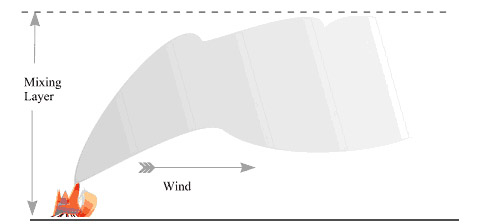
good ventilation index info graph

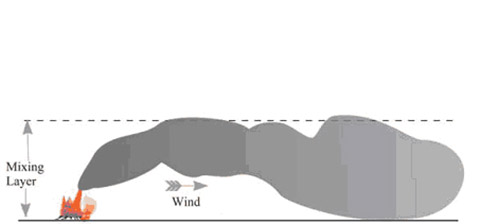
Poor ventilation index

Smoke from chimneys or small fires tends to linger near the source or form a shallow trail that extends downwind.​

poor ventilation index info graph


Examples of how Metro Vancouver interprets the ventilation index Examples of how Metro Vancouver interprets the ventilation index <div class="ExternalClassB8621DF1B6DD4E14B2C97A2801AC99B8">​ <ul><li>​If the ventilation index is “good" for both this afternoon and tomorrow, you may: </li><ul><li>Start a new one-day burn </li><li>Begin a new multiple day burn </li><li>Add vegetative debris to an existing multiple-day burn already in progress<br><br> </li></ul><li>If the ventilation index is “fair" this afternoon and “poor," “fair" or “good" tomorrow, open burning is prohibited unless: </li><ul><li>You are using an air curtain incinerator</li><li>You are burning diseased vegetative debris</li><li>Metro Vancouver has received your Plan for Community Wildfire Risk Reduction.​<br></li></ul></ul>​ </div>

Key terms ​and​ burning scenarios​

The information below offers a simplified overview. If there is any discrepancy between this content and Bylaw 1355 or your open burning approval, then Bylaw 1355 or the approval, as applicable, take precedence. ​


One-day burnOne-day burn<div class="ExternalClassE2F5F880263E4664B4E7342538CC6FCA"><p>​A one-day burn may start no earlier than one hour after sunrise and must end by 4:00 pm or two hours before sunset (whichever is later), on the day it started.​​​<br></p></div>
Multi-day burnMulti-day burn<div class="ExternalClass892CB373F109475589082A1C59D3E8E3"><p>A multi-day burn is two one-day burns or a multiple day burn. Burning may not be started earlier than one hour after sunrise on any day. On day 1, burning must end by 4:00 pm or two hours before sunset (whichever is later). On day 2, burning must end by 4:00 pm unless otherwise authorized in an approval.​​​​<br></p></div>
Air curtain incineratorAir curtain incinerator<div class="ExternalClass1FC4217DF1064272950C1B8424117AD5"><p>An air curtain incinerator is a device designed to aid combustion and reduce emissions by directing a flow of air across a contained fire of vegetative debris. Bylaw 1355 or an open burning approval set the conditions for using this equipment. ​<br></p></div>
Diseased vegetative debris criteriaDiseased vegetative debris criteria<div class="ExternalClassCB368DA74E924F20A170CCB11F63C9D5"><p>To be considered diseased, vegetative debris must be verified or confirmed by a qualified professional as being infested with a plant pathogen or insect listed in Schedule 1 of the BC Open Burning Smoke Control Regulation (OBSCR). Qualified professionals include a registered agrologist, professional biologist, professional forester, or registered forest technologist. If the plant or insect is not listed, the district director will confirm if open burning is necessary to stop the spread.​<br></p></div>
Community wildfire risk reduction planCommunity wildfire risk reduction plan<div class="ExternalClass51B7049C07AC44AFAD811C4A1D282197"><p>This plan is developed or endorsed by a government, band council, or treaty First Nation. It outlines fire risks to a community, identifies necessary mitigation measures, and defines the area to which the plan applies.​<br></p></div>
Understand the forecastUnderstand the forecast<div class="ExternalClass304779B7329E4E0E895BE6355CFE7BDD"><p>​If the ventilation index forecast allows you to start a one-day burn or a multi-day burn, you’re also allowed to conduct burns using an air curtain incinerator, of diseased vegetative debris, and under a Plan for Community Wildfire Risk Reduction.  A second day of burning is also allowed when using an air curtain incinerator, burning diseased vegetative debris, and burning under a Plan for Community Wildfire Risk Reduction when indicated by the forecast.​</p></div>


This website uses cookies to ensure you get the best experience. By continuing to use this site, you accept our use of cookies. View our privacy statement.