Skip Ribbon Commands
Skip to main content
Sign In
Careers Board Meetings Live Chat

Regional Climate Projections and Adaptation

​​​​​​​​​​​​​​​​​​​​​​​​​​​​​

Carbon Neutral 2050 – a Policy and Modelling Report (2021)

This report describes the anticipated reductions in greenhouse gas emissions by modelling and comparing climate policies for a ‘business as planned’ scenario and an ‘aggressive but achievable’ scenario.

Highlights from the report include:

  • By implementing a suite of ‘aggressive yet achievable’ policies, it is possible to significantly decreases greenhouse gas emissions in this region.
  • However, even with this significant decrease, the modelling indicates we are not on track to achieve our 2030 and 2050 targets. To reach these targets, additional and accelerated actions are needed.
  • Reducing overall energy use and switching to clean, renewable energy are key to reaching the goal of a carbon neutral region by 2050.
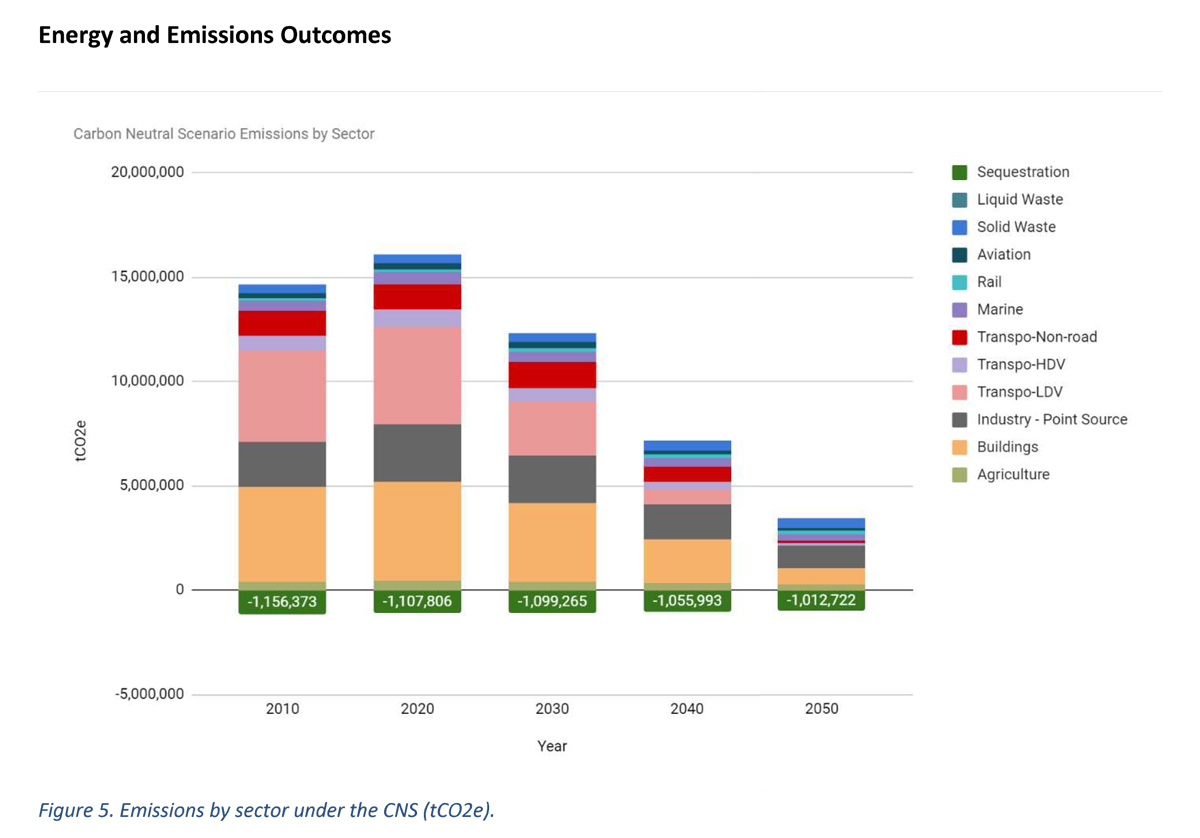
Energy and Emissions Outcomes Chart

​​​​Climate change will have multiple impacts in our region. Metro Vancouver's ability to adapt to the changing climate requires projections of future temperature and precipitation in the region. Work has been completed by the Pacific Climate Impacts Consortium (PCIC) to understand the details of how our climate may change by the 2050s and 2080s. This report provides information to support our region to adapt to the changes ahead.​​​​


Climate Projections for Metro Vancouver - September 2016https://metrovancouver.org/services/air-quality-climate-action/Documents/climate-projections-for-metro-vancouver-2016.pdf, Climate Projections for Metro Vancouver - September 2016Climate Projections for Metro Vancouver - September 2016

​Metro Vancouver is examining the impact that climate change will have on our services, including infrastructure (pumps, wastewater treatment plants, etc.) and regional parks. For example, Metro Vancouver and several partners assessed the vulnerability of the region’s sewerage systems to flooding from changes in precipitation, sea level rise and storm events. Metro Vancouver has also produced rainfall Intensity-Duration-Frequency (IDF) curves for the future climate to assist in sewerage and drainage infrastructure planning and design.


Vulnerability of Vancouver Sewerage Area Infrastructure to Climate Change - March 2008https://metrovancouver.org/services/air-quality-climate-action/Documents/vulnerability-of-vancouver-sewerage-infrastructure-to-climate-change.pdf, Vulnerability of Vancouver Sewerage Area Infrastructure to Climate Change - March 2008Vulnerability of Vancouver Sewerage Area Infrastructure to Climate Change - March 2008
Vulnerability of Fraser Sewerage Area Infrastructure to Climate Change - December 2009https://metrovancouver.org/services/air-quality-climate-action/Documents/vulnerability-fraser-sewerage-area-infrastructure-climate-change-2009.pdf, Vulnerability of Fraser Sewerage Area Infrastructure to Climate Change - December 2009Vulnerability of Fraser Sewerage Area Infrastructure to Climate Change - December 2009
Intensity Duration Frequency Curve Update and Rainfall Analysis (2025)https://metrovancouver.org/about-us/Library/IDF-Curve-Update-and-Rainfall-Analysis-Metro-Vancouver.pdf, Intensity Duration Frequency Curve Update and Rainfall Analysis (2025)Intensity Duration Frequency Curve Update and Rainfall Analysis (2025)
Climate Change Impacts on Precipitation and Stormwater for 2050 and 2100 – Full report (2018)https://metrovancouver.org/services/liquid-waste/Documents/climate-change-impacts-precipitation-stormwater-for-2050-2100-report-2018.pdf, Climate change impacts on precipitation and stormwater for 2050 and 2100 – Full report (2018)Climate Change Impacts on Precipitation and Stormwater for 2050 and 2100 – Full report (2018)
Climate Change Impacts on Precipitation and Stormwater for 2050 and 2100 – Technical brief (2018)https://metrovancouver.org/services/liquid-waste/Documents/climate-change-impacts-precipitation-stormwater-2050-2100–technical-brief-2018.pdf, Climate change impacts on precipitation and stormwater for 2050 and 2100 – Technical brief (2018)Climate Change Impacts on Precipitation and Stormwater for 2050 and 2100 – Technical brief (2018)

In order to respond to the projected climate changes and their impacts in our region, Metro Vancouver’s member jurisdictions are planning for current and future climate influenced risks and taking a variety of actions. This report commissioned by Metro Vancouver summarizes some of the work being undertaken in the region.​


Climate Change Adaptation Scan and Gap Analysis – March 2015https://metrovancouver.org/services/air-quality-climate-action/Documents/climate-change-adaptation-scan-and-gap-analysis-2015.pdf, Climate Change Adaptation Scan and Gap Analysis – March 2015Climate Change Adaptation Scan and Gap Analysis – March 2015

 Related links


Preparing for Climate Changehttps://www.wcel.org/publication/preparing-climate-change-implementation-guide-local-governments-british-columbia, Preparing for Climate ChangePreparing for Climate Change
Sea Level Rise in BChttps://www2.gov.bc.ca/assets/gov/environment/climate-change/adaptation/resources/slr-primer.pdf, Sea Level Rise in BCSea Level Rise in BC
Vulnerability of Vancouver Sewerage Area Infrastructure to Climate Changehttps://metrovancouver.org/services/air-quality-climate-action/Documents/vulnerability-of-vancouver-sewerage-infrastructure-to-climate-change.pdf, Vulnerability of Vancouver Sewerage Area Infrastructure to Climate ChangeVulnerability of Vancouver Sewerage Area Infrastructure to Climate Change

This website uses cookies to ensure you get the best experience. By continuing to use this site, you accept our use of cookies. View our privacy statement.